

Why is support on board especially important right now?
Weeks at sea. Hardly any privacy. Very limited room for movement. High responsibility in shift work. In addition, the current military tensions, especially in the Strait of Hormuz, are placing a massive burden on the mental health of thousands of seafarers, as constant threats of attacks and detentions create a climate of permanent fear. The prolonged uncertainty while waiting at anchorage leads crews to feelings of helplessness and extreme emotional exhaustion. This situation is made even more difficult by the involuntarily extended separation from their families, pushing the psychosocial resilience of those affected to its limits. Without de-escalation, there is a risk of long-term damage to the mental health of the people who keep global supply chains running.
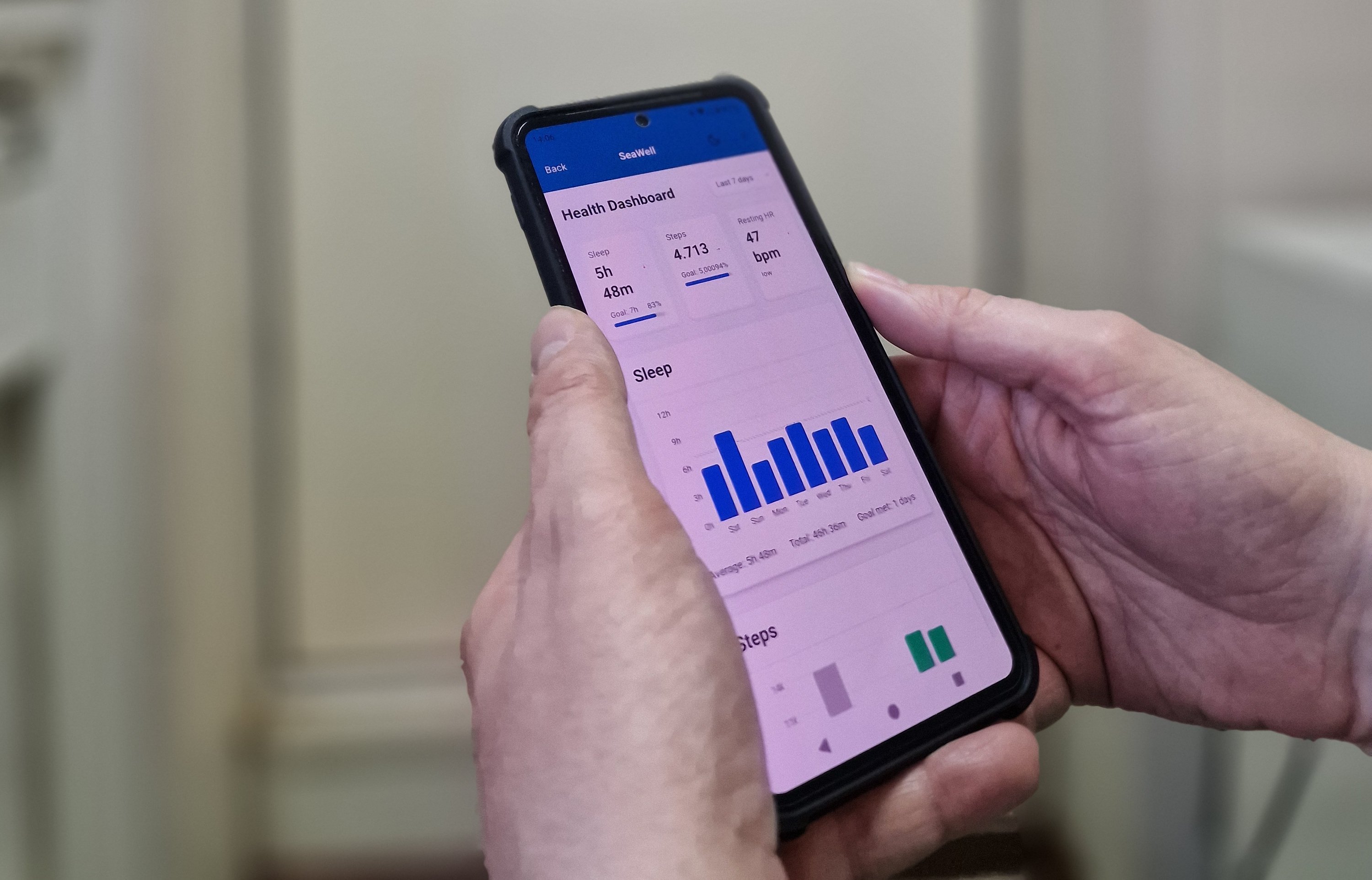
This is exactly where AI-healthy ship comes in. With SeaWell, the project is developing a digital support tool for seafarers that is intended to help directly in everyday life on board: low-threshold, individual and as tailored as possible.
The principle behind it is deliberately simple. A crew member indicates how they are feeling – for example, whether fatigue, stress, exhaustion or a lack of recovery are currently playing a role. This information is supplemented by further data, for instance from questionnaires, smartwatches or measurements taken on board, such as environmental influences or strains in everyday maritime life.
Based on this information, SeaWell is intended to become increasingly better at identifying what kind of support may be useful in a specific situation. The result is not abstract AI analysis, but practical recommendations. Depending on the situation, these interventions may vary greatly: from short impulses for recovery, movement or relaxation to advice on sleep, recovery and self-management, and even everyday measures that remain realistic and feasible under on-board conditions. Depending on the design, they may also include motivating or spiritual impulses where these are desired and appropriate in the usage context.
This is precisely what makes the approach so relevant: not every measure helps every person at every moment. What may be useful for an exhausted crew member in a calm phase may be unsuitable in a tense shift or high-stress situation. SeaWell is therefore not intended to provide generic health tips, but rather tailored recommendations for different people and different situations on board.
SeaWell is being tested on board under real conditions
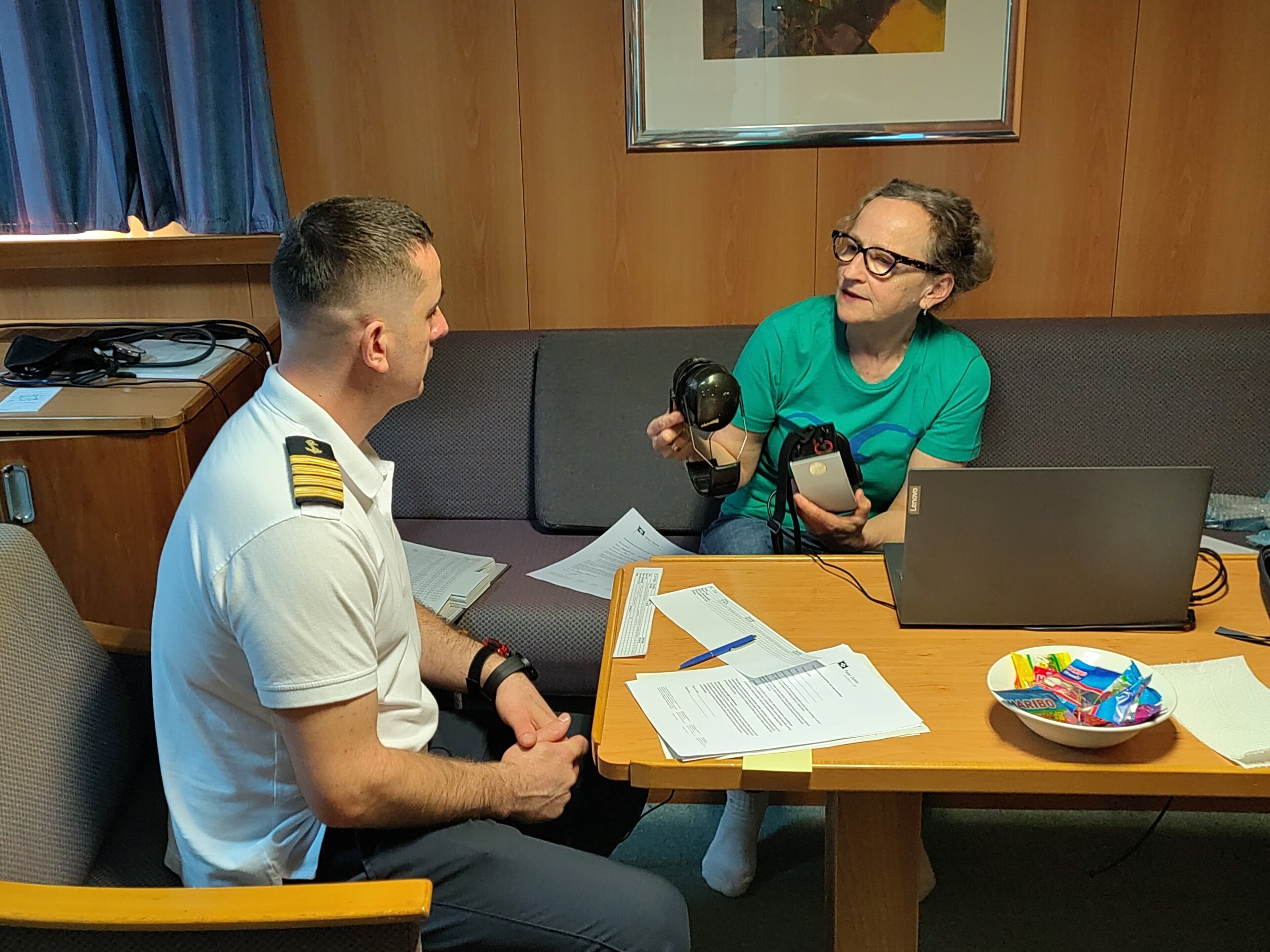
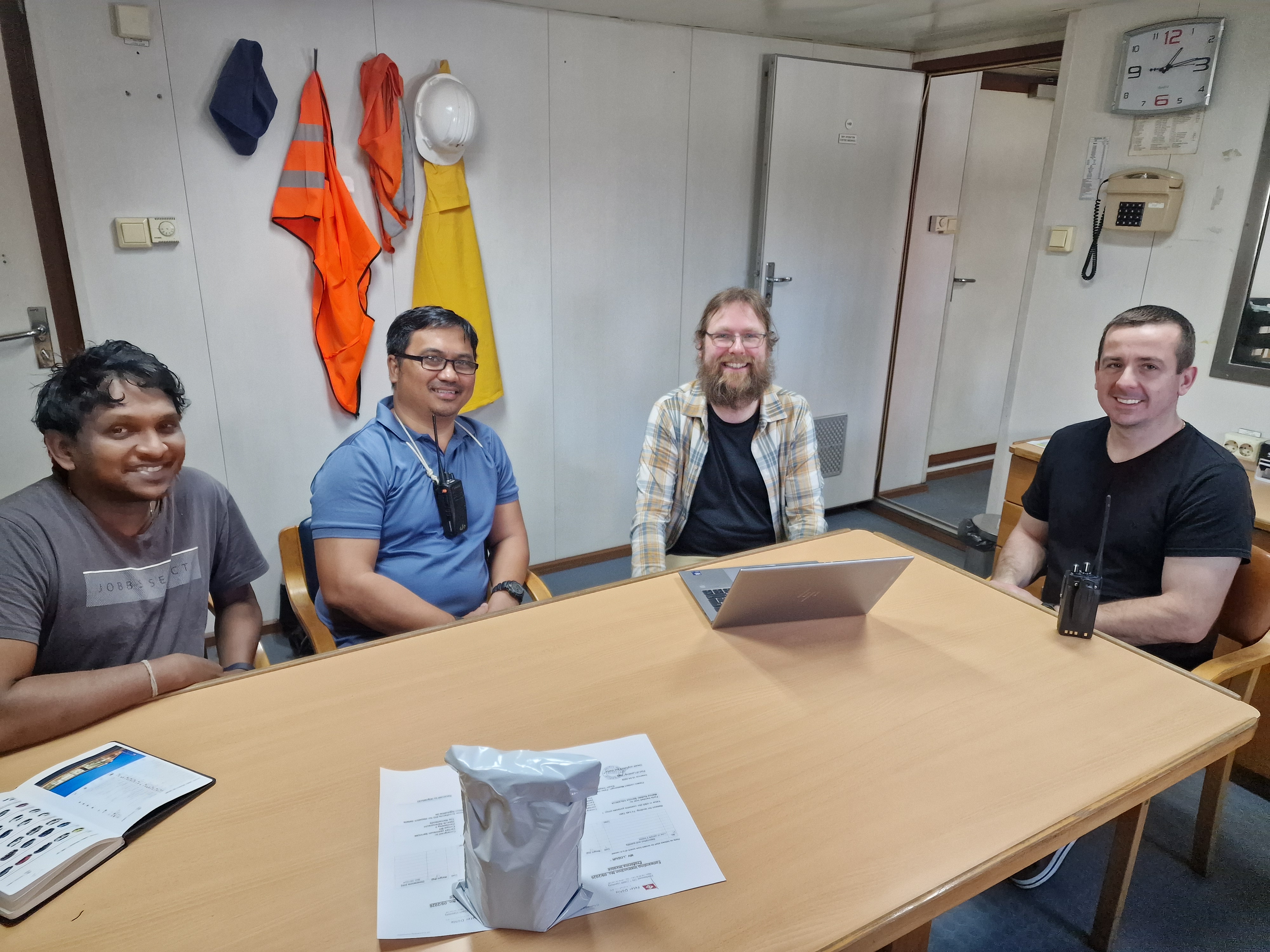
Especially relevant at the moment is the fact that SeaWell is currently being tested again under real conditions on board. The latest version is already running on land – questionnaires and data collection are functioning, simulations have been carried out, and suitable interventions are already being proposed in principle – and this is now to be tested comprehensively in real on-board life.
These on-board studies are particularly valuable because seafarers are directly involved in the development of the support offered, allowing their needs and wishes to be taken into account.
The project aims to close a gap: during their often long stays on board, seafarers generally have no direct access to health or fitness professionals. This is exactly where digital, personal guidance for maintaining and improving health and well-being can make a practical difference.
AI-healthy ship is a joint project involving the University Medical Center Hamburg-Eppendorf, along with other Hamburg-based partners from software development (Lionizers) and maritime practice (Peter Döhle Schiffahrts-KG and Reederei NORD). The project is funded by the European Union through the European Regional Development Fund, as well as by the Free and Hanseatic City of Hamburg. The project partners are also contributing their own funds.