

When geopolitical tensions rise, crews at sea often feel the effects immediately. Uncertainty, heavy workloads, shift work and long periods away from family and everyday life can place additional strain on seafarers’ well-being. The current situation on major shipping routes once again highlights how important practical support on board really is.
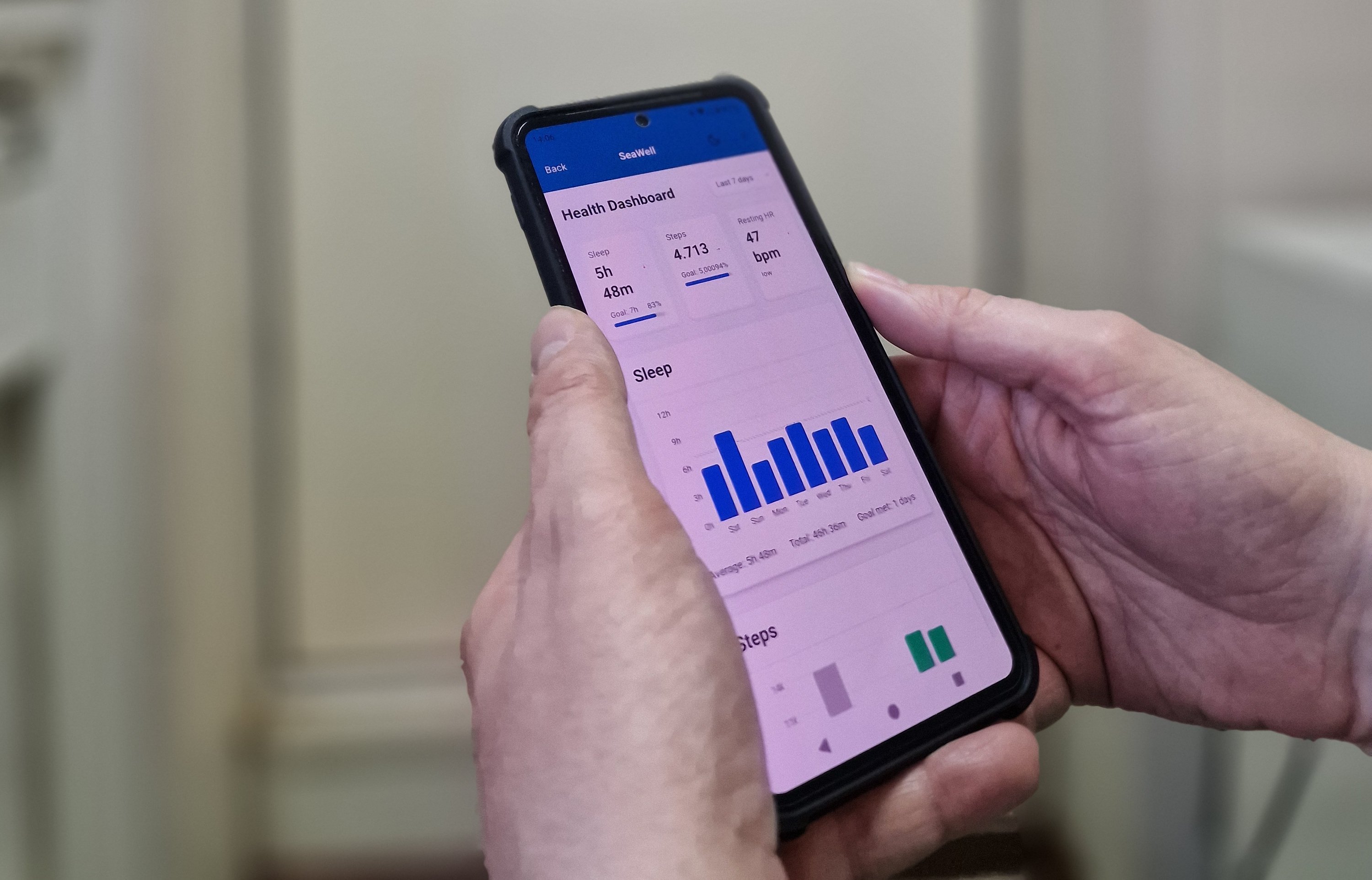
This is exactly where AI-healthy ship comes in. With SeaWell, the project is developing a digital health platform designed to support crew members individually in their daily life on board. It draws on user input, data from wearables and measurements from the on-board environment. Based on this, the system is intended to generate suitable recommendations for recovery, well-being and self-management.
A timely context
Recent developments in international shipping once again show how strongly external crises can affect the working and living conditions of seafarers. Especially in situations like these, it becomes clear that support on board must not only be conceived in the long term, but must also work in everyday practice. Digital solutions such as SeaWell therefore need to address stress where it actually occurs: in the rhythm of work itself, under real conditions and with the actual needs of the crew in mind.
Just back from the sea voyage
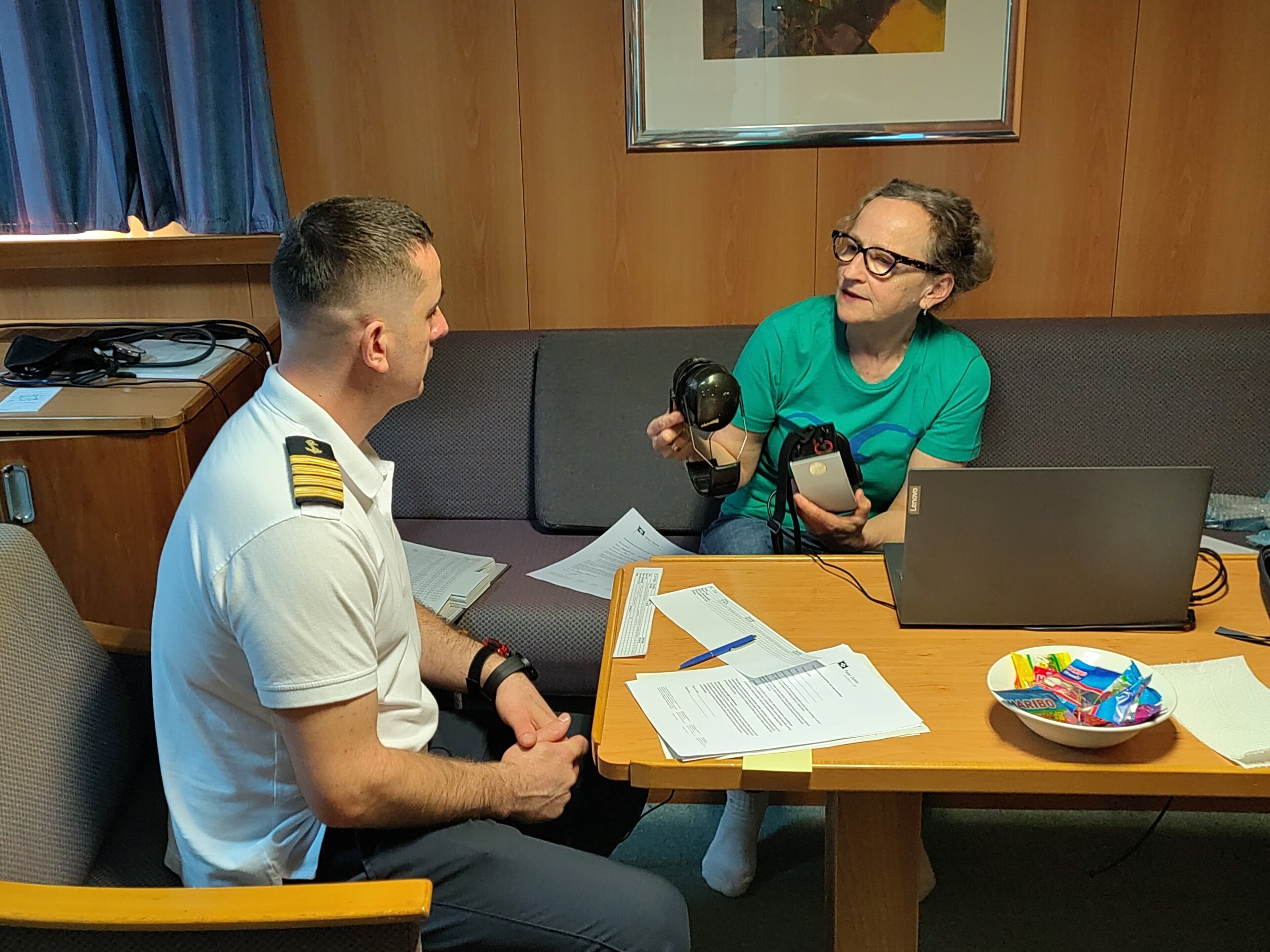
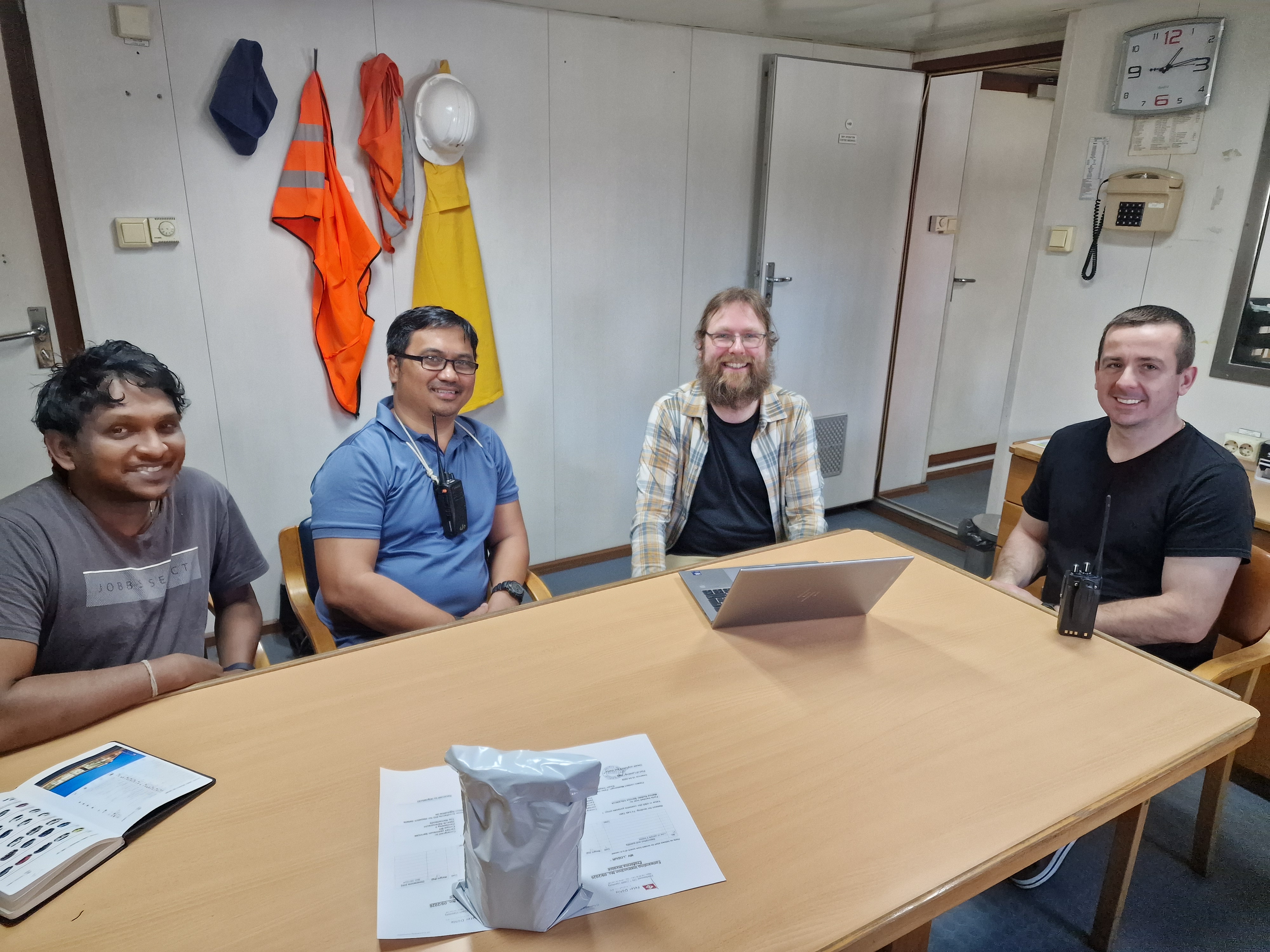
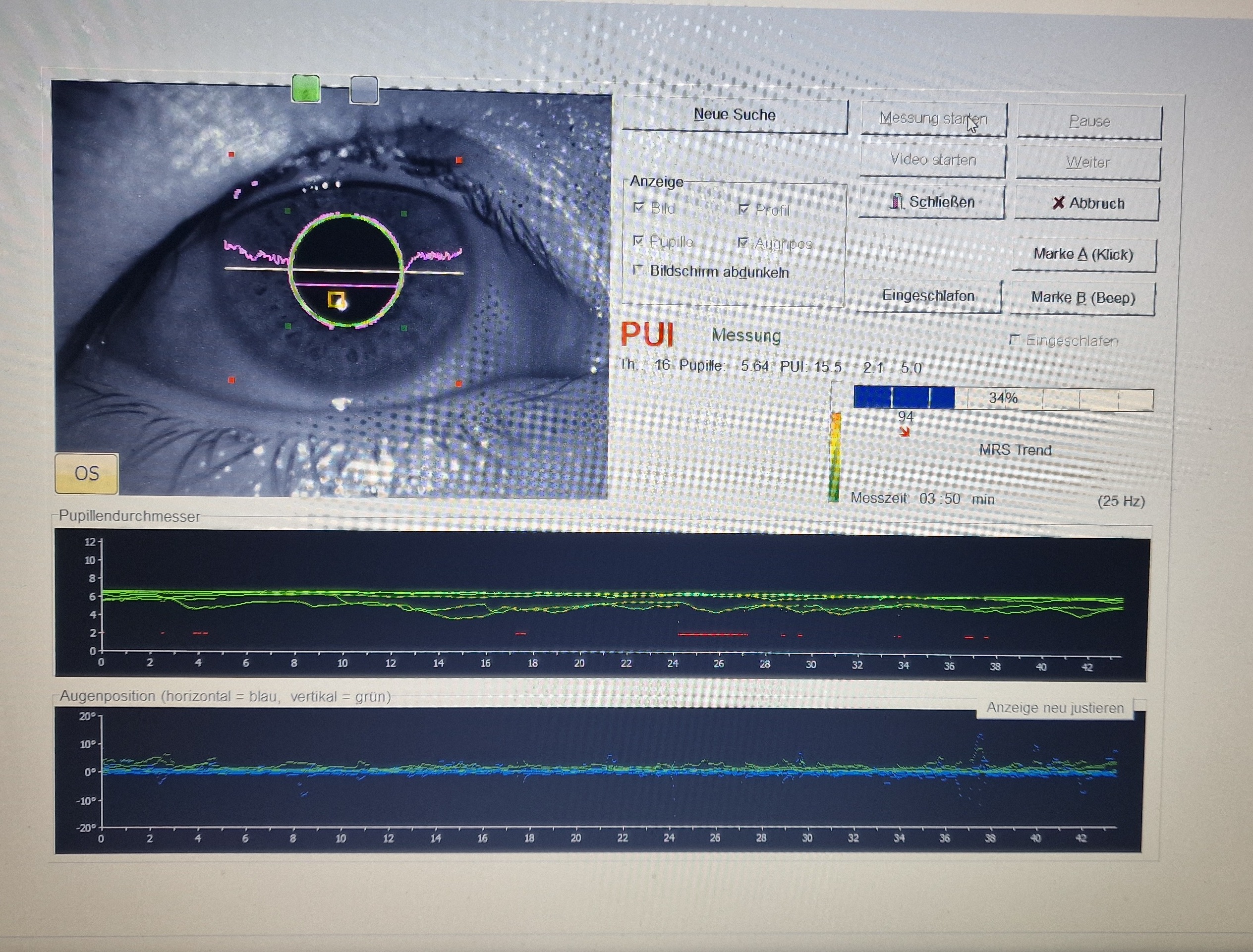
A particularly timely step in the project was the latest on-board study on a vessel operated by Reederei Döhle on the route from Barcelona to Piraeus. At the sprint meeting on 22 April, the consortium reported that the researchers Dorothee Dengler and Lukas Belz had only just returned from the voyage. At that point, the collected data had not yet been fully analysed, which makes the anticipation of the results all the greater.
Alongside the scientific surveys, the software test plan was also carried out under real conditions. According to initial feedback, once the configuration had been received, the system worked largely in a plug-and-play manner. In addition, 17 accounts had already been created for the 20 people on board. The shipping company also provided strong support for the study and expressed great interest in receiving photos and a report.
Technology under real conditions
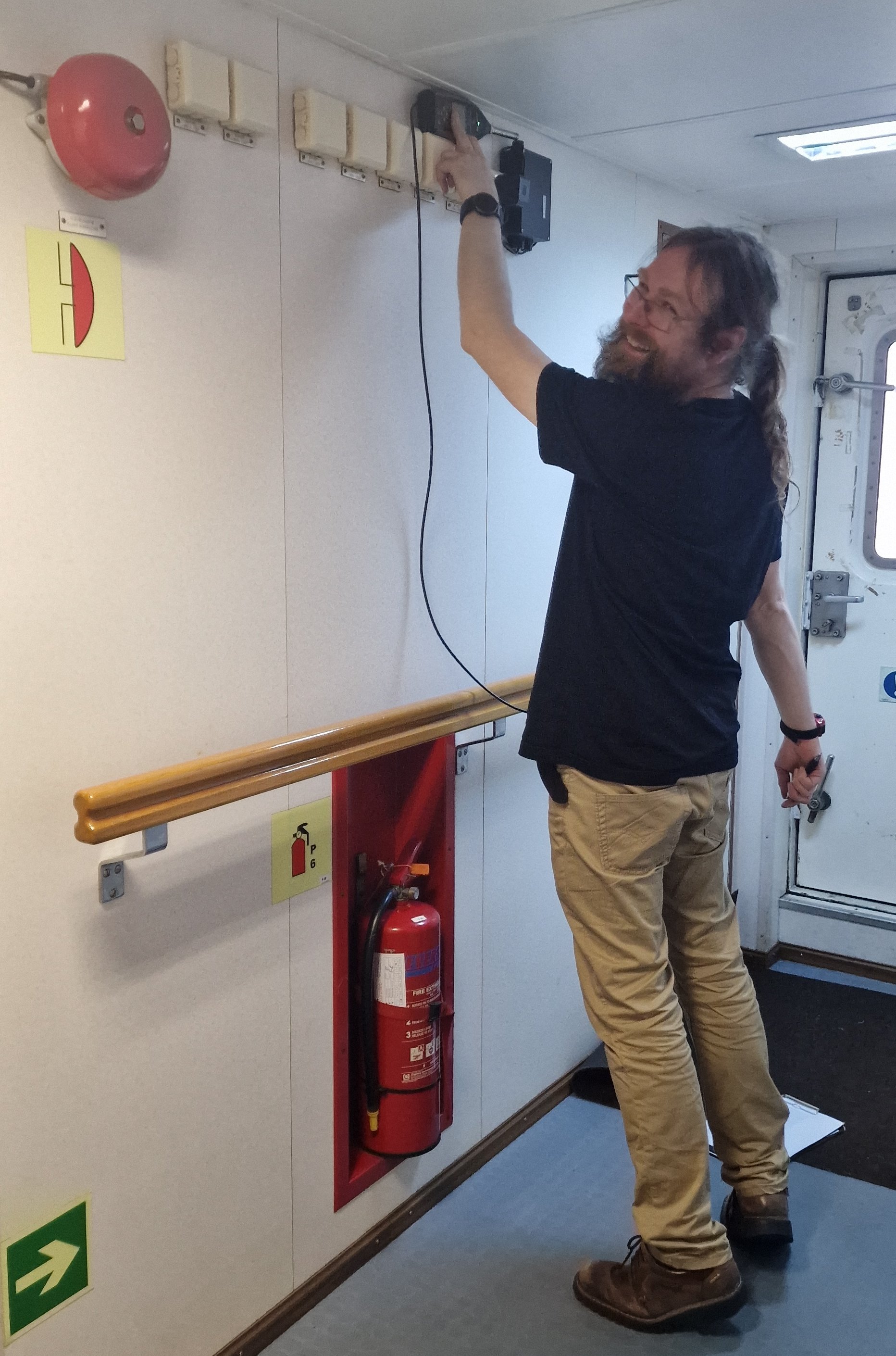
This phase was also particularly valuable from a technical perspective. Sensors were installed directly on board, the system configuration was tested during ongoing operations, and a software bug affecting vibration measurement was corrected. Activities like these show whether the application works reliably not only in a controlled test environment, but also under real-life conditions at sea.
This robustness is crucial for the next development steps. In the long term, SeaWell should not only function when accompanied by a project team, but as reliably as possible in an environment shaped by changing routines, varying technical conditions and limited time windows.
SeaWell in practical testing
This on-board phase is especially important for the project because it does not only answer technical questions. What matters just as much is how the app, the sensors and the data collection perform in the actual day-to-day reality on board, and how the crew experiences the application. It is precisely this interplay between technology, use and practical feedback that is intended to improve SeaWell step by step.
The on-board studies therefore provide not only data, but also important guidance for the further development of user guidance, content and the interventions proposed by the system. They help us understand what is truly practical in everyday life, which functions are accepted, and where further refinement is still needed.
Next step: evaluation and learning
With the team now back from the voyage, the next important phase begins: the systematic evaluation of the findings collected so far. This will be complemented by a travel report and a lessons learned document. Both will help ensure that technical, organisational and content-related experience from on-board practice is fed back into the project in a structured way.
AI-healthy ship is not only about collecting data, but about turning that data into concrete support for people on board. The ongoing on-board tests show how scientific insight, maritime practice and digital development can be brought together to promote health and well-being on merchant vessels in a targeted way.